The claim
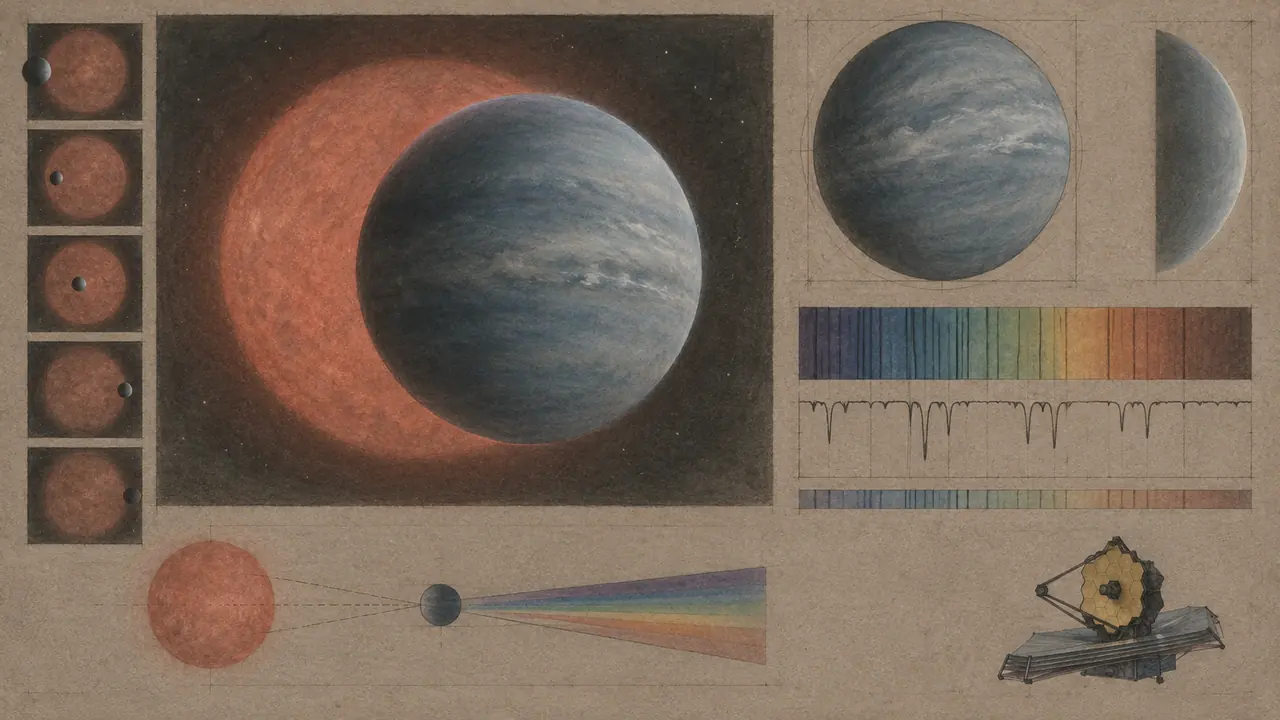
"The James Webb telescope found a gas that on Earth only life makes."
Where the idea comes from
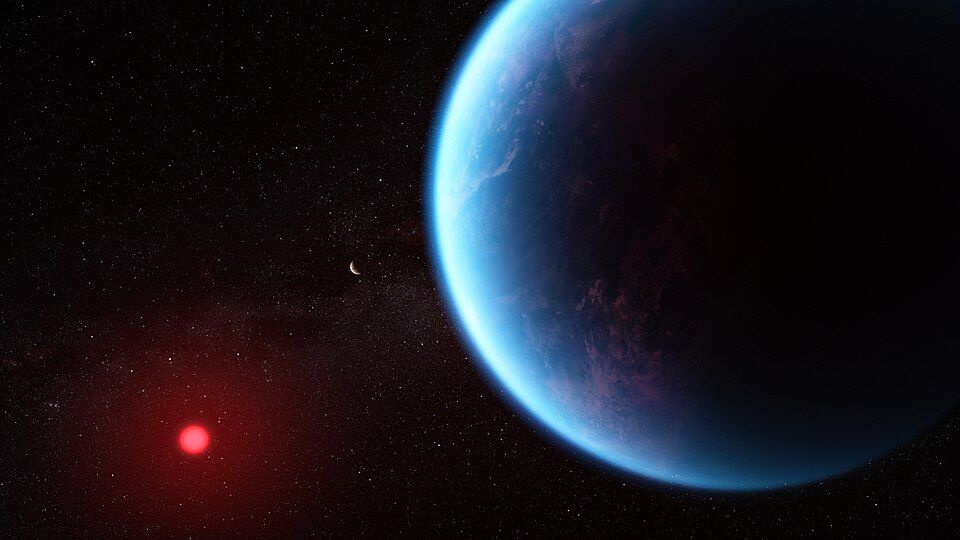
A University of Cambridge team led by Nikku Madhusudhan reported dimethyl sulfide (DMS) or dimethyl disulfide in the planet's atmosphere.
What the evidence shows
- K2-18b is about 8.6 times Earth's mass in its star's habitable zone; the team argues it may be a "Hycean" ocean world.
- The reported signal reached about 3 sigma, short of the 5 sigma physicists usually require for a discovery.
- Several independent reanalyses found the signal weaker and model-dependent, and other molecules such as ethane or propyne could fit.
- Some researchers argue the planet may be a gas-rich mini-Neptune with no surface ocean.
- A 2026 radio search of K2-18b for technosignatures found nothing.
What is still open
More Webb observing time and a confirmation by an independent team at high confidence would move this tripwire. Weigh the explanations and vote.
Our verdict
Worth watching The most exciting hint yet, and heavily disputed.
Sources
- Strongest hints yet of biological activity (University of Cambridge)
- New analysis casts doubt (NPR)
- No signs of technology on K2-18b (Astronomy)
Checked 31 October 2026. Spotted a newer source? Tell us.
The competing explanations
Our summary of the main hypotheses, with what supports and what counts against each one.
A statistical fluke in noisy data
For The signal reached about 3 sigma; several independent reanalyses found it weaker or not significant.
Against The team says 16 to 24 more hours of Webb time could push it to 5 sigma, so the question is testable.
A different molecule with a similar fingerprint
For Ethane, propyne and other hydrocarbons can mimic the DMS or DMDS features in the infrared.
Against The original team argues most predicted molecules can't explain the spectrum.
Real DMS, made without life
For DMS has been found on a comet and in interstellar space, so non-living chemistry can make it.
Against Producing the high levels claimed for K2-18b without life is hard to model.
A gas-rich mini-Neptune with no ocean
For Several models fit the planet as a deep, hot gas envelope where life as we know it is unlikely.
Against The "Hycean" ocean model also fits; the data can't yet tell them apart.
Marine life, like plankton on Earth
For On Earth almost all DMS comes from marine microbes. If the signal holds and abiotic routes fail, life is on the table.
Against Needs the signal confirmed at high confidence by another team, plus ruling out the alternatives.
Your vote: what is the best explanation?
One vote per visitor. Results appear after you vote.
What to watch next
- New Webb observations of K2-18b and a confirmation or rejection by an independent team. No new result had been published by October 2026.
- Better laboratory data on DMS and DMDS spectra and on non-living sources.
- Results on similar "Hycean" candidates such as TOI-270 d.
Watch
 ▶
More from Life in the cosmos
See all UnprovenThe Wow! signalAugust 1977 · Big Ear telescope, OhioA 72-second radio burst was the best alien signal ever received.
 Explained"Little Green Men 1"1967 · Cambridge, EnglandA radio pulse ticking every 1.3 seconds was an alien beacon.
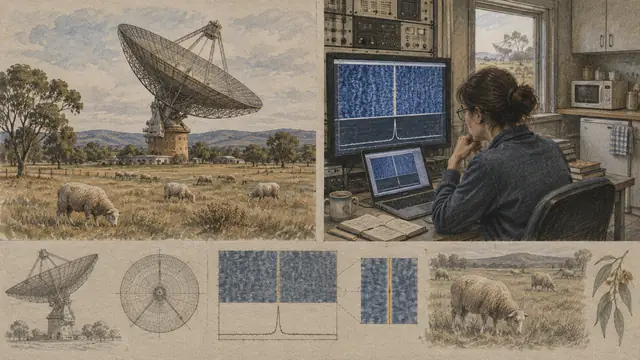 ExplainedBLC1 from Proxima Centauri2019, analysed 2021 · Parkes telescope, AustraliaA narrow radio signal seemed to come from our nearest star.
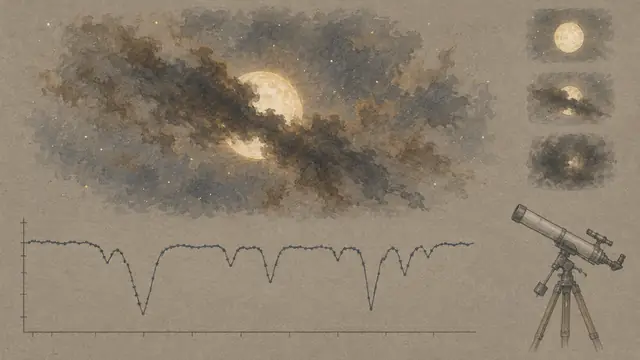 ExplainedTabby's Star2015 to 2018 · KIC 8462852A star dimming by up to 22% could be surrounded by an alien megastructure.
 UnprovenPhosphine on VenusSeptember 2020 · VenusA gas made by microbes on Earth was found in Venus's clouds.
 Worth watchingMars: the "leopard spots" of Cheyava FallsJuly 2024; paper September 2025 · Jezero Crater, MarsNASA's rover found the clearest sign of ancient life on Mars.