ExplainedA solid ordinary explanation fits the evidence.
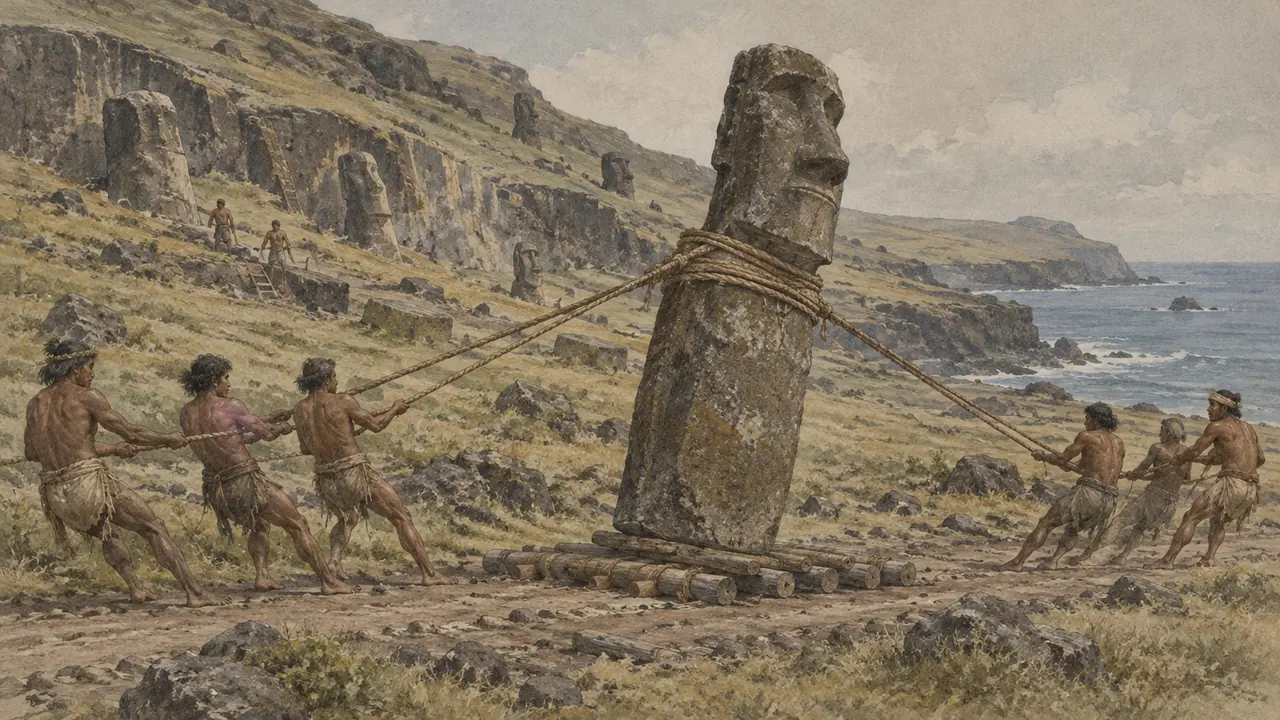
The claim
"Nobody could move giant statues across the island without help."
Where the idea comes from
Thor Heyerdahl's expeditions and later ancient-alien books asked how a small island society moved 80-tonne statues.
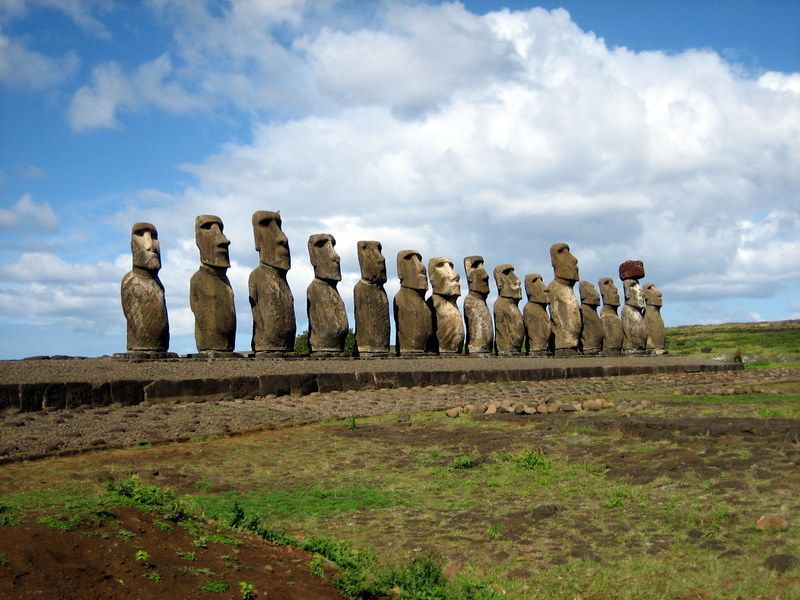
What the evidence shows
- The quarry at Rano Raraku still holds hundreds of unfinished moai at every stage of carving, along with basalt hand picks.
- In 2012 archaeologists Terry Hunt and Carl Lipo had 18 people "walk" a 4.35-tonne replica upright with three ropes, rocking it forward. Rapa Nui oral tradition says the statues walked.
- Moai abandoned along the ancient roads have shapes and break patterns that fit upright transport, and the roads are concave, which helps a rocking statue.
What is still open
Researchers still debate population size and how the islanders' society changed after European contact.
Our verdict
Explained Shown in practice: ropes, teamwork and rocking.
Sources
Checked 31 October 2026. Spotted a newer source? Tell us.
Advertisement
More from Ancient aliens
See all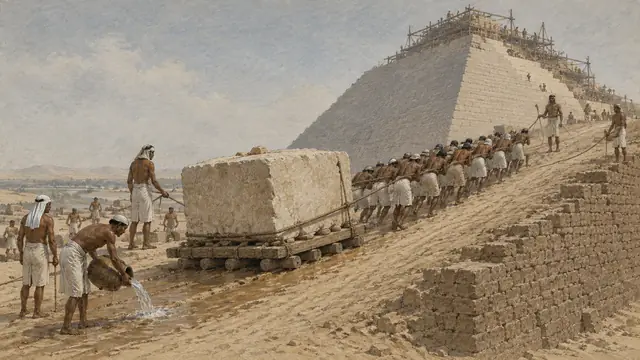 ExplainedThe Great Pyramid of Gizac. 2560 BC · EgyptHumans couldn't have cut, moved and stacked 2.3 million blocks with Bronze Age tools.
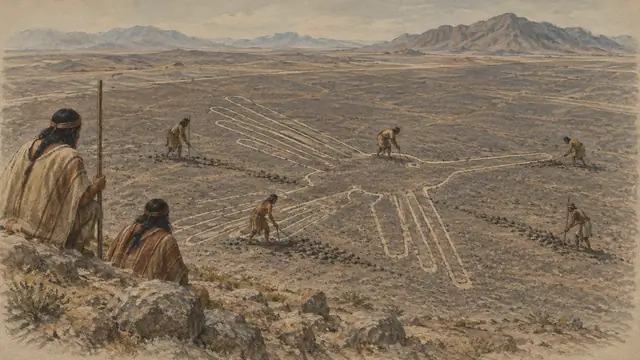 ExplainedThe Nazca Lines500 BC to AD 500 · PeruGiant drawings only visible from the air must have been runways or signals for ancient astronauts.
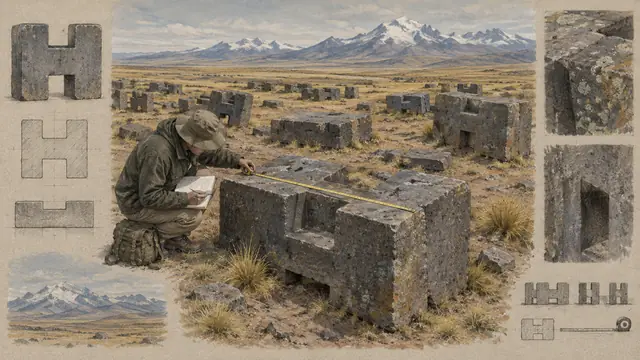 ExplainedPuma Punku's precise stonesc. AD 500 to 600 · Tiwanaku, BoliviaThe H-shaped blocks are cut so precisely they must have been machined.
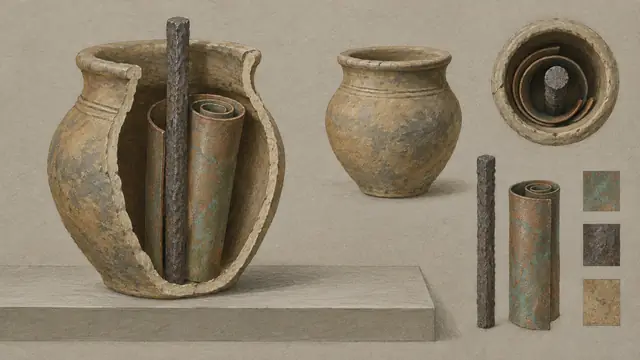 ExplainedThe "Baghdad Battery"c. 2,000 years old · IraqA clay jar with a copper tube and iron rod was an ancient battery, maybe from visitors.
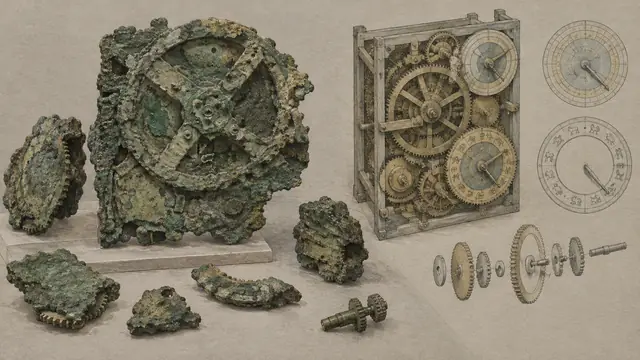 ExplainedThe Antikythera mechanismc. 150 to 60 BC · GreeceA bronze gear computer from ancient Greece is too advanced to be human.
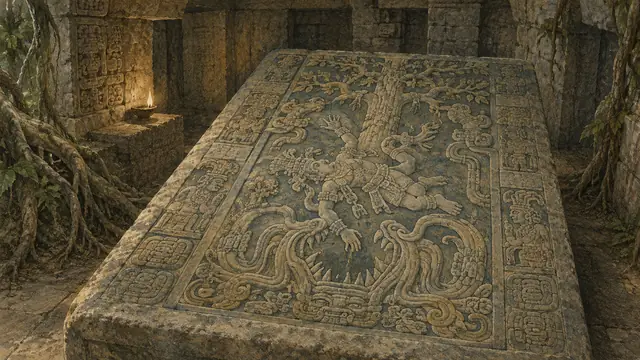 DebunkedThe Palenque "astronaut"AD 683 · MexicoKing Pakal's tomb lid shows an astronaut at the controls of a rocket.