ExplainedA solid ordinary explanation fits the evidence.
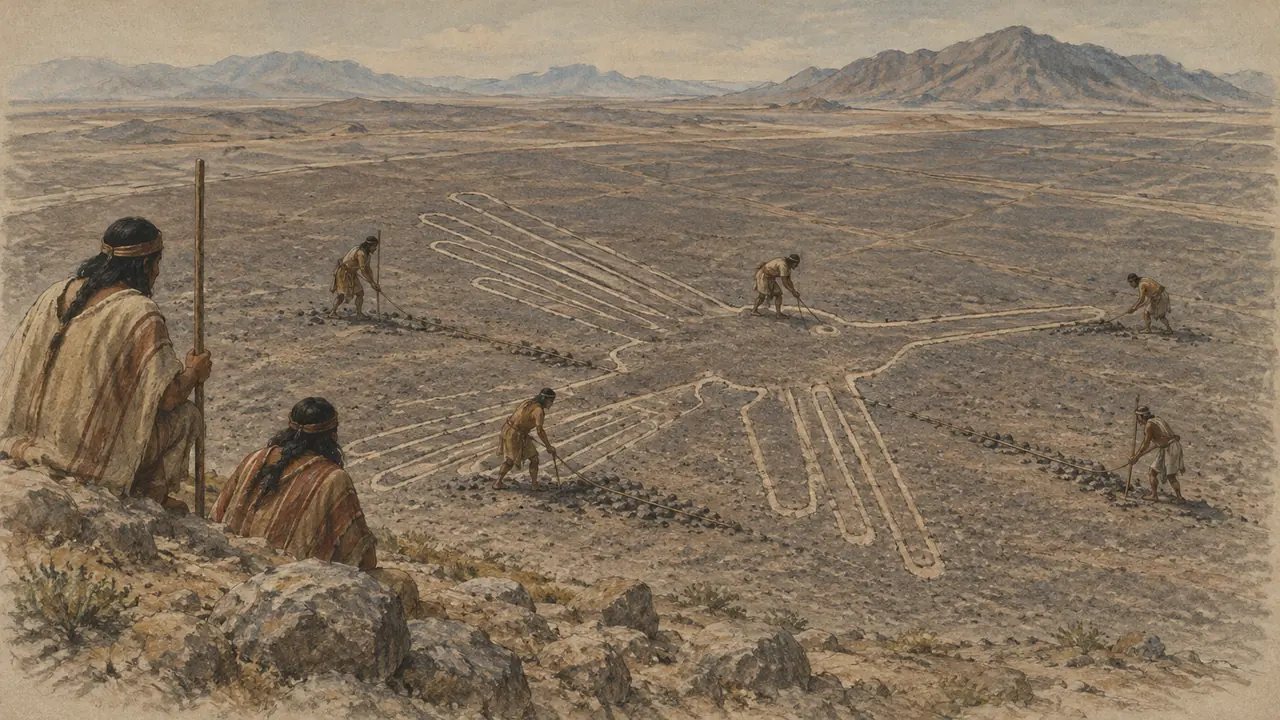
The claim
"Giant drawings only visible from the air must have been runways or signals for ancient astronauts."
Where the idea comes from
Von Däniken suggested the long straight lines looked like airfields. Peruvian researchers and Maria Reiche, who studied the lines for 50 years, had long described them as ground drawings.
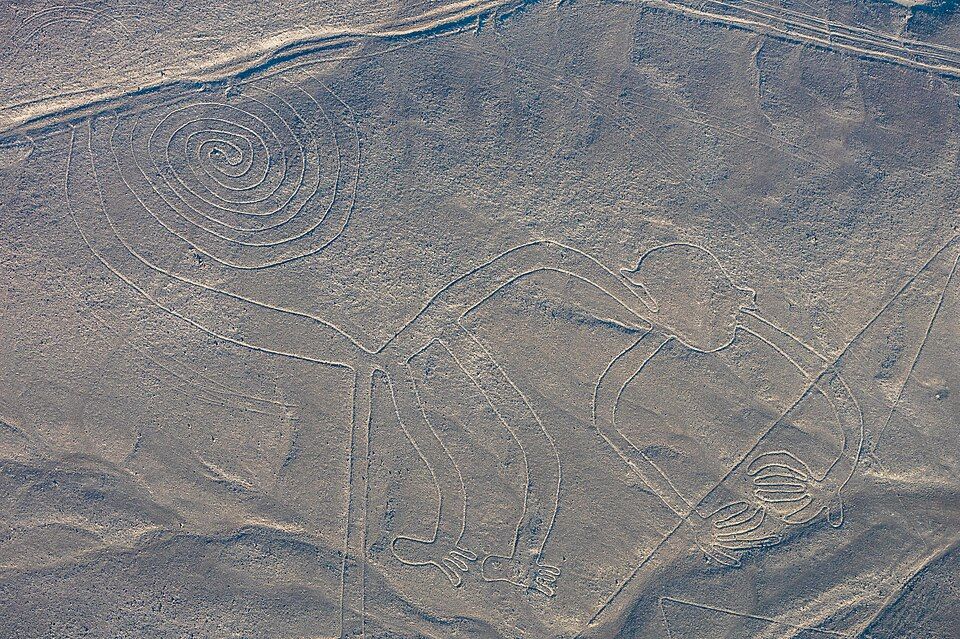
What the evidence shows
- The lines are shallow: the dark, iron-oxide-coated surface stones were raked aside to expose the paler ground beneath, usually to a depth of 10 to 30 cm. The dry, windless climate preserved them.
- Experiments have reproduced large figures in days with small teams, wooden stakes and cords. Remains of such stakes have been found at line ends.
- Many figures can be made out from the surrounding foothills; you don't need an aircraft to design or see them.
- A 2024 survey using AI on aerial imagery (published in PNAS) found 303 new figurative geoglyphs, most small and placed beside footpaths, pointing to processions and ritual rather than aviation.
- A runway of loose pebbles on soft ground would be useless to any aircraft, and nothing at the site suggests landing or launching.
What is still open
Researchers still debate the exact meanings: water and fertility rituals, processional paths, or astronomical markers for some lines.
Our verdict
Explained Easy to make with simple tools, tied to Nazca ritual, and useless as runways.
Sources
- Lines and Geoglyphs of Nasca (UNESCO)
- AI-accelerated Nazca survey (PNAS, 2024)
- Nazca Lines (Wikipedia)
Checked 31 October 2026. Spotted a newer source? Tell us.
Advertisement
Watch
 ▶
More from Ancient aliens
See all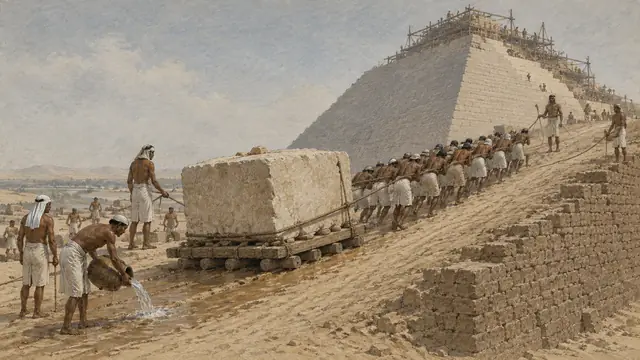 ExplainedThe Great Pyramid of Gizac. 2560 BC · EgyptHumans couldn't have cut, moved and stacked 2.3 million blocks with Bronze Age tools.
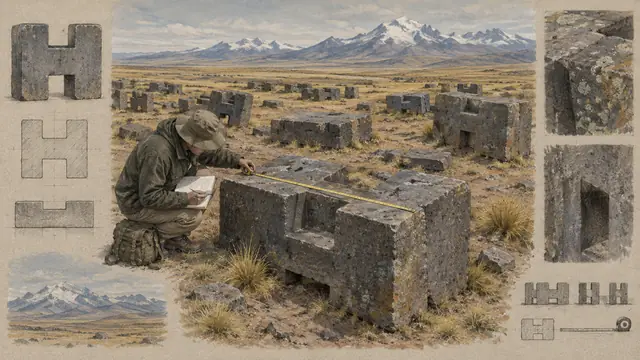 ExplainedPuma Punku's precise stonesc. AD 500 to 600 · Tiwanaku, BoliviaThe H-shaped blocks are cut so precisely they must have been machined.
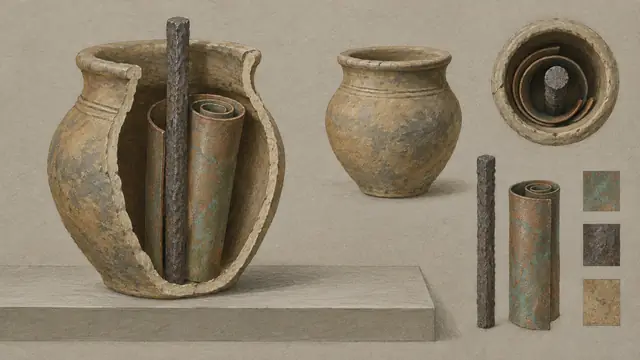 ExplainedThe "Baghdad Battery"c. 2,000 years old · IraqA clay jar with a copper tube and iron rod was an ancient battery, maybe from visitors.
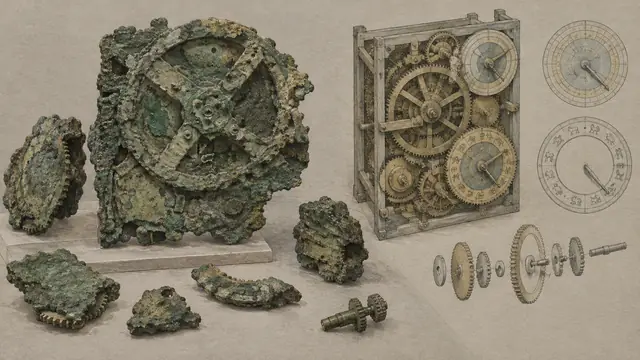 ExplainedThe Antikythera mechanismc. 150 to 60 BC · GreeceA bronze gear computer from ancient Greece is too advanced to be human.
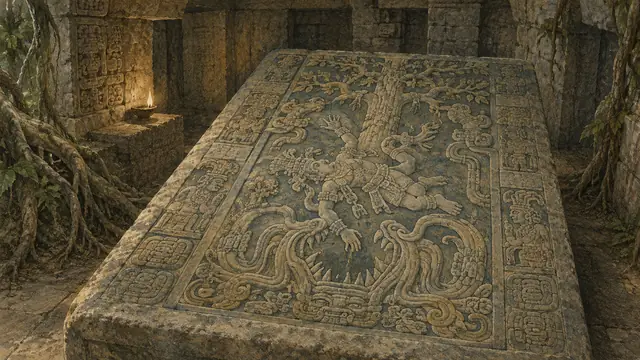 DebunkedThe Palenque "astronaut"AD 683 · MexicoKing Pakal's tomb lid shows an astronaut at the controls of a rocket.
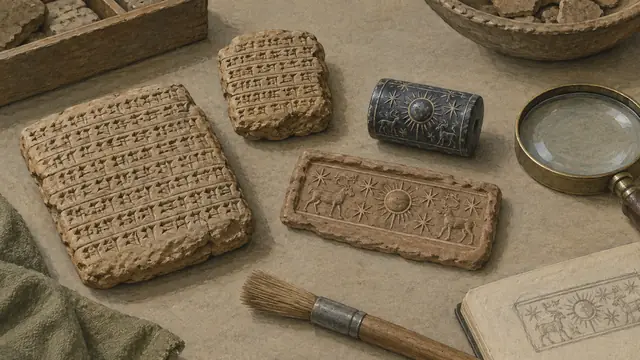 DebunkedThe Anunnaki and planet NibiruSumer, c. 3000 BC · IraqSumerian tablets record aliens from a hidden planet, Nibiru, who created humans.